
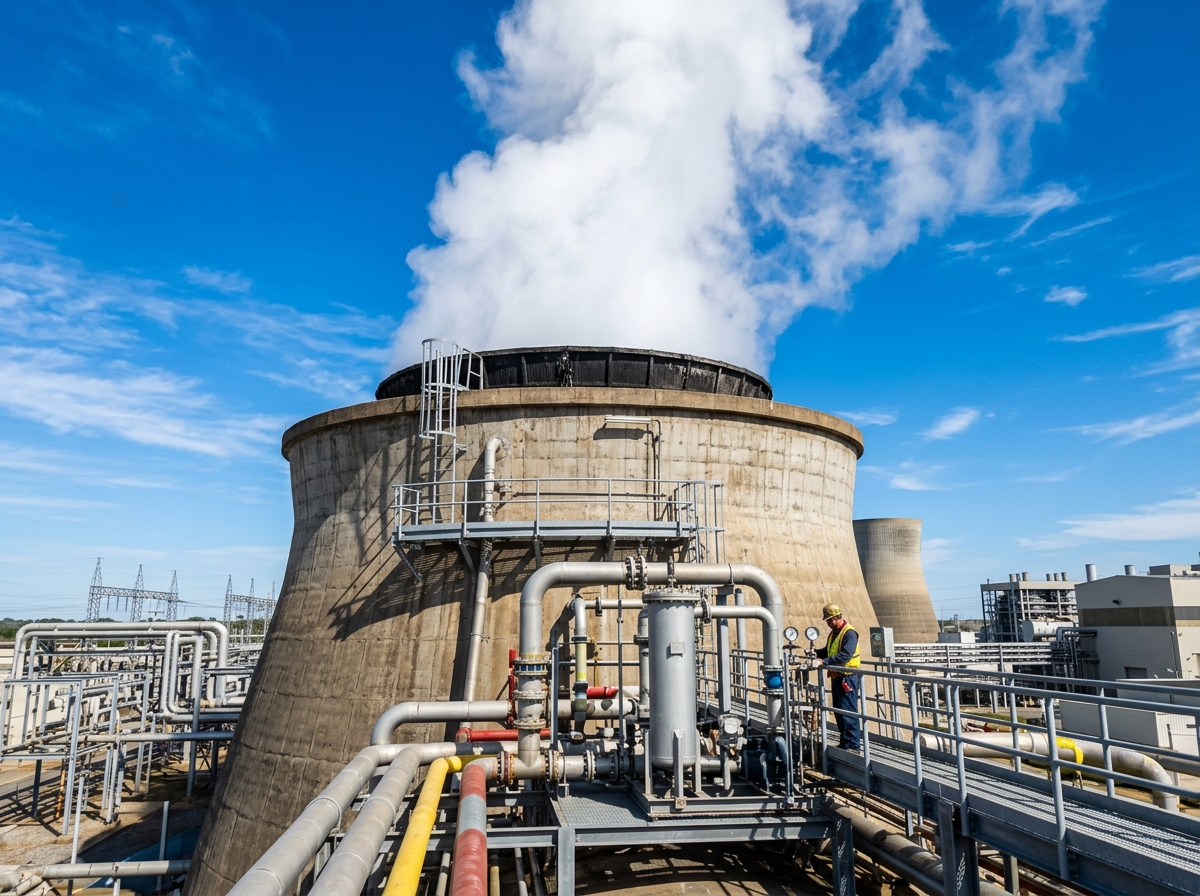
Essential Chemicals for Cooling Towers
Maintaining a cooling tower requires a precise balance of chemistry to prevent scale, corrosion, and biological fouling. Our cooling tower water treatment chemicals guide India highlights the core components necessary for system health and efficiency.
Scale Inhibitors
Scale forms when dissolved minerals exceed their solubility limit, depositing on heat exchange surfaces. This drastically reduces efficiency. Key scale inhibitors include:
- Polyacrylic Acid (PAA): Excellent for calcium carbonate scale control.
- HEDP: A robust phosphonate that offers both scale and corrosion inhibition.
Corrosion Inhibitors
Corrosion can lead to catastrophic equipment failure. Inhibitors form a protective film on metal surfaces.
- BTA (Benzotriazole) and TTA (Tolyltriazole): Widely used for protecting copper and its alloys.
- Phosphonates: Synergize well with zinc to protect mild steel.
Biocides for Microbial Control
Cooling towers are ideal breeding grounds for bacteria, algae, and fungi. Without proper biocides, biofilms can form, which act as insulators and harbor harmful pathogens like Legionella.
- Isothiazolinones (CMIT/MIT): Broad-spectrum non-oxidizing biocide effective against a wide range of microbes.
- Benzalkonium Chloride (BKC): Effective biocide and surfactant that helps in biofilm removal.
Defoamers
Foaming can cause operational issues and loss of water. Using a Silicone Defoamer helps in quickly collapsing foam and maintaining system stability.
Conclusion
A comprehensive water treatment program is not a one-size-fits-all solution. It requires regular monitoring and adjustments using high-quality chemicals tailored to your specific water chemistry.